
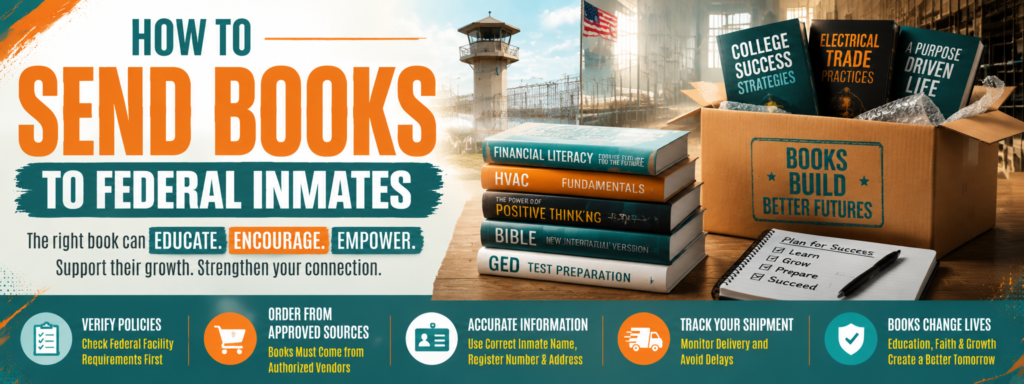
If you have a loved one incarcerated in a federal correctional facility, learning how to send books to federal inmates can provide an important source of education, encouragement, and personal growth. Books remain one of the most requested items in federal prisons because they offer opportunities for learning, self-improvement, faith development, and constructive use of time.
While the process is generally straightforward, it requires compliance with Federal Bureau of Prisons (BOP) regulations. Failure to follow facility guidelines may result in rejected shipments or delayed deliveries.
This complete guide by Sending Books to Inmates explains everything families and friends need to know to send books to federal inmates, including federal prison book rules, approved vendors, common restrictions, and useful resources such as Prison Book Policies and Book Policy Guard.
Why Families Choose to Send Books to Federal Inmates
Many families choose to send books to prisoners because reading provides both educational and emotional benefits during incarceration.
When you send books to federal inmates, you help provide:
- Educational opportunities
- Vocational training resources
- Personal development materials
- Religious and spiritual guidance
- Entertainment and stress relief
- Career preparation tools
Many federal inmates use their time to pursue educational programs, learn trades, strengthen their faith, and prepare for life after release. Choosing to send books to federal inmates can contribute to those goals and demonstrate meaningful support.
Federal Bureau of Prisons Book Policies
Before attempting to send books to inmates, it is important to understand the general policies established by the Federal Bureau of Prisons.
Most federal institutions allow inmates to receive books under specific conditions. Typically, books must be shipped directly from:
- Publishers
- Authorized bookstores
- Approved distributors
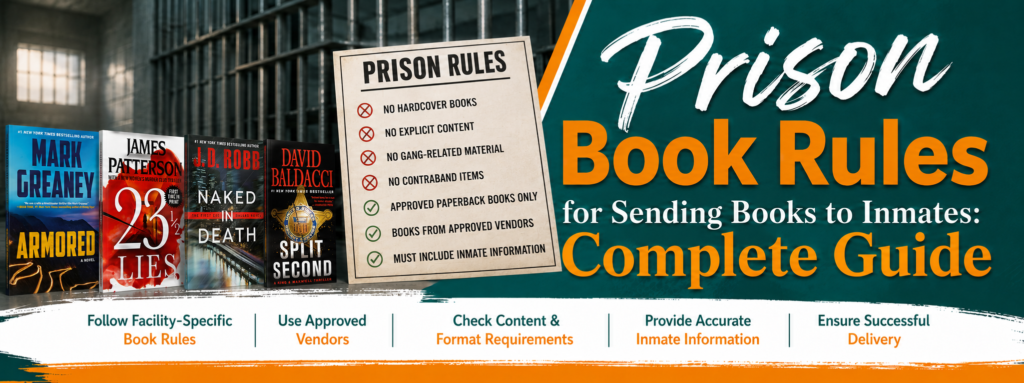
Many federal facilities do not allow individuals to personally mail books from home. This is one of the most important rules to remember when you send books to federal inmates.
Because individual institutions may have additional restrictions, families should always verify facility-specific requirements before sending books.
Check Prison Book Policies Before You Send Books to Federal Inmates
One of the most useful resources available is Prison Book Policies – https://prisonbookpolicies.com/
Before you send books to inmates, reviewing prison-specific regulations can help prevent costly mistakes. Prison Book Policies helps families understand inmate mail requirements, approved book sources, and facility restrictions.
Using Prison Book Policies before you send books to incarcerated loved ones can significantly reduce the likelihood of rejected shipments.
Use Book Policy Guard for Additional Verification
Another valuable tool for families who want to send books to federal inmates is Book Policy Guard.
Book Policy Guard helps identify facility-specific book requirements and provides guidance designed to simplify inmate book delivery.
Families who use Book Policy Guard before they send books often find it easier to navigate changing prison regulations and mailing requirements.
Combining Prison Book Policies and Book Policy Guard can provide additional confidence when preparing to send books to federal inmates.
What Types of Books Can You Send to Federal Inmates?
When you send books to federal inmates, selecting appropriate reading materials is essential.
Popular categories include:
Educational Books
Educational materials remain among the most requested options when families send books to federal inmates.
Popular subjects include:
- GED preparation
- Business
- Entrepreneurship
- Personal finance
- Computer skills
- Mathematics
- Science
- History
Vocational Training Books
Many people send books to federal inmates who are preparing for future employment opportunities.
Common topics include:
- HVAC
- Electrical work
- Plumbing
- Welding
- Construction
- Automotive repair
Religious Books
Faith-based materials are another popular choice when families send books to federal inmates.
Common selections include:
- Bibles
- Devotional guides
- Religious study materials
- Inspirational books
Self-Help Books
Many supporters send books to federal inmates focused on:
- Personal growth
- Leadership
- Communication
- Goal setting
- Emotional wellness
- Financial literacy
Fiction and Recreational Reading
Books provide positive entertainment and mental stimulation to inmates.
Step-by-Step Guide to Send Books to Federal Inmates
Following the proper process can improve delivery success.
Step 1: Verify Inmate Information
Before you send books to federal inmates, gather:
- Full legal name
- Register number
- Facility name
- Correct mailing address
Accurate information is critical.
Step 2: Review Facility Policies
Every institution may have additional rules regarding book deliveries.
Always confirm regulations before you send books to federal inmates.
Step 3: Select Approved Books
Choose books that comply with prison regulations.
Appropriate book selection can improve the likelihood of successful delivery when you send books to federal inmates.
Step 4: Order Through an Approved Vendor
Federal facilities generally require books to come directly from authorized sources.
Many families choose trusted providers such as:
These providers understand prison regulations and help families send books to federal inmates while reducing compliance concerns.
Step 5: Track the Shipment
After you send books to inmates, monitor tracking information whenever available.
Tracking helps identify delivery issues and provides peace of mind.
Common Reasons Books Are Rejected
Even when attempting to send books to federal inmates, mistakes can occur.
Common reasons for rejection include:
- Incorrect inmate information
- Unauthorized sender
- Prohibited content
- Damaged packaging
- Facility-specific restrictions
- Non-compliant book formats
Reviewing regulations before you send books to federal inmates can help avoid these problems.
Benefits of Sending Educational Books to Federal Inmates
Many families specifically choose to send those books that support education and rehabilitation.
Educational books can help inmates:
- Earn diplomas
- Develop job skills
- Improve literacy
- Learn business concepts
- Prepare for reentry
Every time you send books to federal inmates with educational goals in mind, you support long-term personal development.

Why Choose Sending Books to Inmates
At Sending Books to Inmates, we understand the challenges families face when trying to send books to federal inmates.
Our mission is to simplify inmate book delivery by helping customers find prison-approved books and navigate correctional facility requirements.
Working alongside trusted resources such as Prison Book Policies, Book Policy Guard, SureShot Books Publishing LLC, and Corrections BookStore, we help families confidently send books while minimizing delivery complications.
Frequently Asked Questions
Can I personally mail books to a federal inmate?
Most federal facilities require books to be shipped directly from approved retailers or publishers. Always verify facility regulations before attempting to send books to federal inmates.
Are hardcover books allowed?
Some federal institutions restrict hardcover books. Check facility-specific policies before you sending books.
Can federal inmates receive educational books?
Yes. Educational materials are among the most commonly approved items when families send books to federal inmates.
How can I verify prison book rules?
Prison Book Policies and Book Policy Guard are excellent resources to review before you send books to federal inmates.
Contact Us
If you have any other questions or queries related to our services, feel free to contact us at:
- Phone: (708) 856-0657
- Email: info@correctionsbookstore.com
- Website: sendingbookstoinmates.com
We’re here to serve you.
Conclusion
Learning how to send books to federal inmates can make a significant difference in the life of an incarcerated loved one. Books provide education, encouragement, faith, personal development, and productive ways to spend time during incarceration.
By reviewing federal prison regulations, using resources like Prison Book Policies and Book Policy Guard, selecting approved books, and ordering through trusted providers, families can successfully send books to prisoners with greater confidence.
If you are ready to send books to federal inmates, take the time to verify facility requirements and choose quality reading materials that can support growth, rehabilitation, and lifelong learning.