
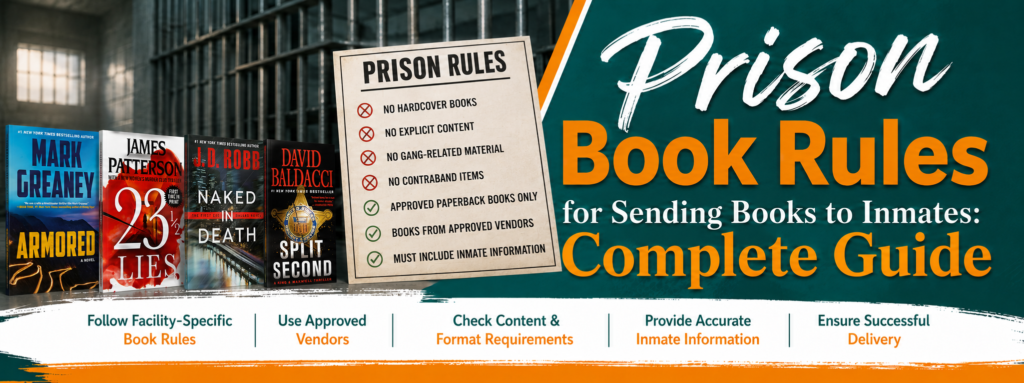
Understanding prison book rules is essential for anyone involved in sending books to inmates. Correctional facilities have strict regulations designed to maintain safety, control contraband, and manage incoming mail. Because of this, even well-intentioned efforts can be delayed or rejected if the rules are not followed correctly.
This guide by Sending Books to Inmates breaks down the most important prison book rules, including what is allowed, what is restricted, and how to ensure successful delivery every time.
Why Prison Book Rules Matter When Sending Books to Inmates
Every correctional facility enforces specific guidelines to ensure security and order within the institution.
These rules help:
- Prevent prohibited materials
- Control contraband risks
- Ensure proper mail handling
- Maintain facility safety
Without understanding these rules, the process can become complicated and result in rejected shipments.
1. Books Must Come from Approved Vendors
One of the most important rules is that books must typically come from approved vendors.
Most facilities require books to be shipped directly from:
- Authorized bookstores like Sending Books to Inmates
- Publishers like Corrections BookStore
- Approved inmate book suppliers
Personal shipments are often not accepted by facilities.
2. Paperback vs Hardcover Restrictions
Many prisons have strict format rules for sending books to inmates.
Common restrictions include:
- Hardcover books may be prohibited
- Paperback books are usually preferred
- Spiral-bound books may be restricted in some facilities
Before ordering books for prisoners, always confirm format requirements for the specific facility.
3. Content Restrictions for Prison Books
Content is heavily regulated.
Commonly restricted materials include:
- Explicit sexual content
- Gang-related material
- Violence-focused instructional content
- Security-sensitive information
Understanding content rules is essential for successful delivery and to avoid delays.
4. Required Inmate Information Must Be Accurate
Incorrect information is one of the most common reasons for rejection when sending books to inmates.
You must include:
- Full legal inmate name
- Correct inmate ID number
- Facility name
- Accurate mailing address
Even small errors can disrupt the process.
5. Direct Shipping Rules
Most correctional institutions require direct shipping.
This means:
- Books must be shipped directly from vendors
- Third-party or personal shipping is often not allowed
- Packages must follow facility labeling rules
Following this rule ensures smoother process and ultimately successful delivery.
6. Facility-Specific Rules Vary Widely
Prisons may not have identical rules for sending books to inmates.
Differences may include:
- Allowed genres
- Quantity limits
- Shipping carriers
- Inspection procedures
Always check facility-specific policies before sending books to inmates.

7. Inspection and Security Checks
All books sent to inmates are inspected before delivery.
During inspection, facilities may:
- Open packages
- Inspect content page-by-page
- Reject non-compliant materials
This is why compliance is critical when sending books to inmates.
8. Approved Book Categories
Most prisons allow specific categories when ordering books to inmates, including:
- Educational books
- Self-help books
- Religious books
- Vocational training materials
- Approved fiction
Choosing approved categories improves success when sending books to inmates.
9. Packaging and Labeling Requirements
Proper packaging is another key rule for sending books to prisons.
Requirements may include:
- Clear return address
- Proper vendor labeling
- Secure packaging
- No unauthorized inserts
Improper packaging can result in failed delivery.
10. Tracking and Delivery Confirmation
Tracking is recommended when sending books to inmates.
It helps:
- Confirm delivery
- Detect delays
- Ensure compliance success
- Improve accountability
Tracking improves confidence.
Best Practices for Sending Books to Inmates
To follow prison rules successfully when ordering books for inmates, always:
- Use approved vendors like Sending Books to Inmates
- Check Prison Book Policies before ordering
- Verify book eligibility using Book Policy Guard
- Double-check inmate information
- Follow format and content rules
- Use tracking when available
These steps make the process more reliable and stress-free.
Sending Books to Inmates
Sending Books to Inmates is a dedicated platform that helps families and friends simplify the process. It ensures books are selected and shipped in compliance with prison regulations, reducing the risk of rejection.
Through this service, users can confidently follow prison requirements while ordering books for prisoners across federal, state, and private facilities.
Prison Book Policies
Prison Book Policies provides detailed, facility-specific rules. It helps users understand what each prison allows, including restrictions on formats, content, and shipping methods.
Before sending books to inmates, checking Prison Book Policies can help avoid common mistakes and ensure compliance with each facility’s requirements.
Book Policy Guard
Book Policy Guard is a compliance tool available when ordering through SureShot Books. It helps verify whether selected books meet prison requirements before they are shipped.
This tool is especially useful, as it reduces the risk of rejection by checking:
- Content eligibility
- Format restrictions
- Facility-specific rules
- Vendor compliance
Using Book Policy Guard improves success rates and minimise the risk of delays.
Why Following Prison Book Rules Matters
Following rules ensures that ordered books:
- Avoids rejection
- Saves time and money
- Supports inmate education
- Encourages rehabilitation
- Ensures successful delivery
Proper compliance makes sending books to inmates more effective and meaningful.
Contact Us
If you have any other questions or queries related to our services, feel free to contact us at:
- Phone: (708) 856-0657
- Email: info@correctionsbookstore.com
- Website: sendingbookstoinmates.com
We’re here to serve you.
Conclusion
Understanding prison book rules is essential for successful sending books to inmates. From vendor restrictions to content guidelines and inmate information requirements, every detail matters.
By using trusted platforms like Sending Books to Inmates, reviewing Prison Book Policies, and verifying compliance through Book Policy Guard, families can make the process of sending books to prisoners simple, safe, and successful.
When rules are followed correctly, books becomes a powerful way to support education, rehabilitation, and personal growth.