
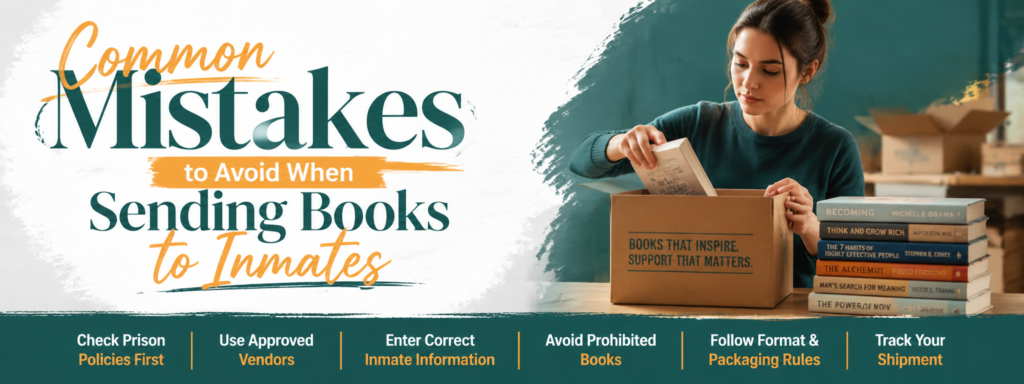
Understanding the process of sending books to inmates is essential for families, friends, and supporters who want to provide educational and meaningful reading material to incarcerated individuals. While books can be one of the most impactful forms of support, many people unintentionally make mistakes that lead to delays, rejections, or returned shipments.
Correctional facilities have strict guidelines for inmate books, and even small errors can result in books being denied. Platforms like Sending Books to Inmates, along with tools such as Prison Book Policies and Book Policy Guard, are designed to help simplify the process and reduce these common mistakes.
This guide highlights the most frequent errors people make when they order or send books to inmates and how to avoid them to ensure successful delivery.
1. Not Checking Prison Book Policies Before Sending Books to Inmates
One of the biggest mistakes is failing to review the specific prison’s rules.
Every facility has different requirements for sending books to inmates, including:
- Approved vendors
- Book formats (paperback vs hardcover)
- Content restrictions
- Shipping rules
- Packaging requirements
Before sending, always verify the facility’s official mail policy. Resources like Prison Book Policies provide clear, up-to-date information about what each facility allows.
Ignoring these rules is one of the most common reasons books are rejected.
2. Using the Wrong Vendor When Sending Books to Inmates
Another frequent mistake is purchasing from unauthorized sellers.
Most correctional facilities require that books be sent through:
- Approved bookstores like Corrections BookStore
- Publishers
- Authorized inmate book vendors
If books are shipped from personal addresses or unapproved marketplaces, they are often rejected.
Using trusted services like Sending Books to Inmates ensures that books are sourced from approved vendors and shipped correctly, reducing the risk of rejection.
3. Incorrect Inmate Information
A surprisingly common mistake is entering incorrect or incomplete inmate details.
To successfully complete delivery, you must include:
- Full legal name
- Inmate ID number
- Facility name
- Complete mailing address
Even small spelling errors can cause delays or returned shipments.
4. Sending Prohibited Books
Many people assume all books are allowed when sending books to inmates, but correctional facilities restrict certain content.
Commonly prohibited materials include:
- Explicit adult content
- Gang-related material
- Security-sensitive information
- Certain violent content
- Unauthorized instructional material
Always check guidelines before sending books to inmates. Tools like Book Policy Guard can help identify restricted content based on facility rules.
5. Ignoring Format Restrictions (Hardcover vs Paperback)
A major mistake is not checking format rules.
Many prisons only allow paperback books because hardcover books can pose security risks.
Before sending books to inmates, confirm whether the facility accepts:
- Paperback books only
- New books only
- Books shipped directly from vendors
Ignoring format restrictions often leads to rejection.

6. Not Using Helpful Tools Like Book Policy Guard
Families often struggle with rules when sending books to their loved ones in prisons, especially when policies vary by state or facility.
Book Policy Guard simplifies this process by identifying facility-specific requirements before you place an order. It helps ensure compliance with prison regulations and reduces the chances of mistakes.
Using tools like Book Policy Guard alongside Prison Book Policies makes sending books to inmates much easier and more reliable.
7. Shipping Books From Home
Many correctional facilities do not allow individuals to personally mail books when sending books to inmates.
Instead, they require books to be shipped directly from approved vendors.
Sending books from home is one of the most common reasons shipments fail, as packages may be automatically rejected.
Using services like Sending Books to Inmates ensures that books are shipped correctly from approved sources.
8. Not Following Packaging Requirements
Even if books are allowed, improper packaging can cause issues.
Common packaging mistakes include:
- Missing return address
- Incorrect labeling
- Damaged packaging
- Unsealed shipments
- Improper vendor labeling
Proper packaging is critical for successful delivery.
9. Ordering the Wrong Types of Books
Choosing the wrong content is another common issue when sending books to inmates.
While many people focus only on availability, it’s important to consider prison-approved categories such as:
- Educational books
- Self-help books
- Religious books
- Vocational training books
- Approved fiction titles
Selecting inappropriate material often leads to rejection.
10. Not Tracking Shipments
A final mistake when sending books to inmates is not tracking the order.
Tracking helps you:
- Confirm delivery
- Identify delays
- Resolve issues quickly
- Ensure successful completion
Without tracking, it becomes difficult to know whether the shipment was successful.
Best Practices for Sending Books to Inmates
To avoid mistakes, follow these best practices:
- Always verify prison policies using Prison Book Policies
- Use approved vendors like Corrections BookStore or services like Sending Books to Inmates
- Double-check inmate information
- Select approved book categories
- Use tracking whenever possible
- Follow facility packaging rules
- Use tools like Book Policy Guard to confirm compliance
These steps greatly improve success when sending books to inmates.
Why Sending Books to Inmates Matters
When done correctly, books provides:
- Education and learning opportunities
- Emotional support
- Personal development
- Rehabilitation support
- Positive use of time
Avoiding mistakes ensures that sending books to inmates becomes a meaningful and impactful experience for both senders and recipients.

Contact Us
If you have any other questions or queries related to our services, feel free to contact us at:
- Phone: (708) 856-0657
- Email: info@correctionsbookstore.com
- Website: sendingbookstoinmates.com
We’re here to serve you.
Conclusion
While sending books to inmates is a powerful way to support incarcerated individuals, it requires careful attention to detail. From selecting approved vendors to following prison regulations, avoiding mistakes is essential for success.
By understanding common errors and using helpful resources like Sending Books to Inmates, Prison Book Policies, and Book Policy Guard, families can ensure their efforts are not wasted and that books reach their intended recipients without delay.
These tools make sending books to prisoners simpler, more reliable, and stress-free, helping you provide meaningful support every step of the way.