

One of the most common questions families ask is, “Can you send books to inmates?” The answer is usually yes, but there are important rules and restrictions that must be followed. Most correctional facilities allow family members and friends to send books to inmates, provided the books meet institutional guidelines and are shipped according to facility policies.
Books are among the most valuable items inmates can receive. Whether you wanna send books for educational purposes, personal development, religious study, or entertainment, understanding the process can help ensure successful delivery.
In this guide by Sending Books to Inmates, you’ll learn everything you need to know about how to send books to prisoners, including prison book policies, approved vendors, common restrictions, and tips for avoiding rejected shipments.
Can You Really Send Books to Inmates?
Yes, in most cases you can send books to inmates, but every correctional facility establishes its own mail regulations. Federal prisons, state prisons, county jails, and private correctional facilities may all have different requirements.
While facilities generally encourage educational and constructive reading materials, they often require that individuals send books through approved bookstores, publishers, or authorized vendors.
Before you send books to inmates, always verify the institution’s policies to avoid delays or rejections.
Why Families Send Books to Inmates
Many families send books to prisoners because books provide opportunities for learning, growth, and rehabilitation.
When you send books to incarcerated loved ones, you provide access to:
- Educational resources
- Career training materials
- Self-help books
- Religious texts
- Recreational reading
- Personal development opportunities
Choosing to send books to inmates can help incarcerated individuals remain productive, motivated, and mentally engaged during their incarceration.
Understanding Prison Book Policies
One of the most important steps before you send books to inmates is understanding prison-specific regulations.
Every facility may have different rules regarding:
- Book formats
- Shipping methods
- Approved vendors
- Quantity limits
- Restricted content
A helpful resource for families who want to send books to prisons is Prison Book Policies. This platform helps users review facility-specific regulations and understand what books may be accepted.
Checking Prison Book Policies before sending books can save time, money, and frustration.
How Book Policy Guard Can Help
Another valuable resource for people who want to send books to inmates is Book Policy Guard.
Book Policy Guard helps families identify correctional facility requirements and provides guidance that can reduce the likelihood of rejected shipments. The tool is accessible through SureShot Books Publishing LLC, making it easy for families to review prison book requirements while shopping for approved inmate books.
Before sending books, using Book Policy Guard can help ensure that your selected books comply with institutional guidelines.
Together, Prison Book Policies and Book Policy Guard provide valuable support for families for successful delivery.
Common Requirements to Send Books to Inmates
Although policies vary, there are several common rules you should know.
Books Must Come from Approved Sources
Many facilities require families to send books to inmates directly from approved sources such as publishers, authorized distributors, or trusted inmate book vendors. Popular vendors include:
- Sending Books to Inmates
- SureShot Books Publishing LLC
- Corrections BookStore
- Publishers
- Approved bookstores
- Authorized distributors
Personal shipments from home are often prohibited.
Accurate Inmate Information Is Required
Whenever you send books to inmates, include:
- Full inmate name
- Identification number
- Facility name
- Correct mailing address
Incorrect information can prevent successful delivery.
Content Restrictions Apply
Facilities may reject books that contain:
- Explicit material
- Security-sensitive information
- Gang-related content
- Other prohibited subjects
Review facility policies carefully before sending books to inmates.
Format Restrictions May Apply
Some facilities only allow paperback books. Before you send books to inmates, verify whether hardcover books are accepted.
Best Types of Books to Send to Inmates
When you send books to inmates, selecting the right materials can improve acceptance rates and provide meaningful benefits.
Educational Books
Many people send books to inmates pursuing educational goals.
Popular educational categories include:
- GED preparation
- Business
- Mathematics
- Science
- History
- Personal finance
- Computer skills
Self-Help Books
Families often send books to inmates that focus on:
- Leadership
- Personal growth
- Communication
- Goal setting
- Emotional intelligence
Religious Books
Religious materials are among the most frequently requested items when people send books to inmates.
Popular choices include:
- Bibles
- Devotional books
- Faith-based study guides
- Inspirational literature
Fiction and Recreational Reading
Many families send books to inmates simply to provide positive entertainment and mental stimulation.
Popular genres include:
- Mystery
- Thriller
- Science fiction
- Historical fiction
- Biographies
How to Send Books to Inmates Successfully
If you’re preparing to send books, following a simple process can improve your chances of success.
Step 1: Verify Facility Policies
Before you send books to inmates, review the institution’s current regulations.
Step 2: Confirm Inmate Information
Accurate information is essential whenever you send books to prisons.
Step 3: Check Prison Book Policies
Prison Book Policies can help you understand facility requirements before you send books to inmates.
Step 4: Use Book Policy Guard
Book Policy Guard provides additional guidance for families who want to send books to prisoners while minimizing compliance issues.
Step 5: Order from a Trusted Source
Many families choose reputable providers when they send books to inmates.
Trusted inmate book providers include:
These providers understand prison mail requirements and help customers with greater confidence.
Step 6: Track Your Shipment
After you send books to inmates, monitor tracking information whenever possible.
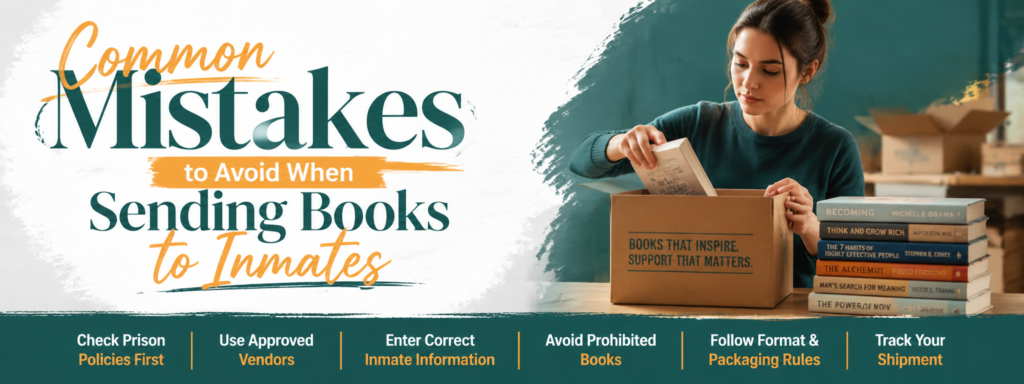
Common Mistakes to Avoid
Many rejected packages result from simple mistakes.
Avoid these issues while sending books to inmates:
- Incorrect inmate information
- Sending books from home when prohibited
- Choosing restricted materials
- Ignoring facility guidelines
- Ordering hardcover books when only paperbacks are allowed
The more carefully you prepare, the better your chances of successful delivery.
Benefits of Sending Books to Inmates
Every time you send books to inmates, you provide opportunities for learning, personal development, and positive engagement.
Books can help inmates:
- Improve literacy skills
- Learn vocational trades
- Strengthen faith
- Develop career skills
- Build self-confidence
- Prepare for life after release
Families who send books to inmates often find comfort in knowing they are supporting education and rehabilitation.

Why Choose Sending Books to Inmates
At Sending Books to Inmates, we understand the challenges families face when sending books to inmates.
Our mission is to simplify inmate book delivery and help customers find prison-approved reading materials. We work alongside trusted resources such as Prison Book Policies, Book Policy Guard, SureShot Books Publishing LLC, and Corrections BookStore to help families deliver books to their loved ones in prisons successfully.
Whether you’re helping a spouse, child, sibling, parent, or friend, we strive to make sending books to inmates easier while complying with correctional facility requirements.
Frequently Asked Questions
Can anyone send books to inmates?
In most cases, yes. However, facilities may require that books come from approved vendors.
Can inmates receive educational books?
Yes. Educational materials are among the most common inmate books.
Are paperback books required?
Some facilities only allow paperbacks. Always verify policies before sending books to inmates.
How can I check prison regulations?
Prison Book Policies and Book Policy Guard are useful resources to review before you send books to inmates.
Contact Us
If you have any other questions or queries related to our services, feel free to contact us at:
- Phone: (708) 856-0657
- Email: info@correctionsbookstore.com
- Website: sendingbookstoinmates.com
We’re here to serve you.
Conclusion
So, can you send books to inmates? In most cases, yes, but success depends on following correctional facility rules and using approved sources.
By reviewing facility requirements, checking Prison Book Policies, using Book Policy Guard, and working with trusted providers such as Sending Books to Inmates, families can confidently send books while minimizing the risk of rejected shipments.
When you send books to inmates, you provide more than reading material, you provide education, encouragement, personal growth opportunities, and hope for the future.