
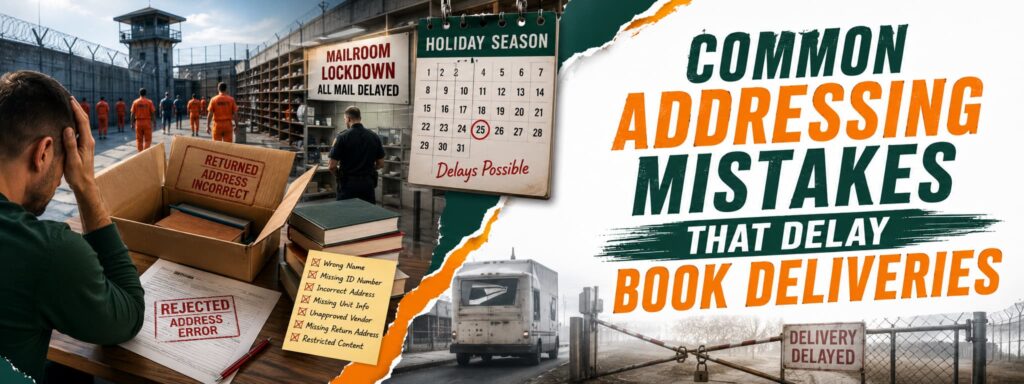
Sending books to inmates is a meaningful way to provide education, encouragement, and emotional support. However, even small errors in addressing can result in delays, rejected shipments, or returned packages. Understanding the most common addressing mistakes can help families ensure their books reach the intended recipient on time and avoid repeated common addressing mistakes.
By combining careful preparation with tools like prison book policies and Book Policy Guard, families can avoid issues and simplify the process of sending books to inmates while reducing common addressing mistakes.
1. Incorrect Inmate Name
One of the most frequent common addressing mistakes is using the wrong inmate name.
- Always use the full legal name as it appears in facility records.
- Avoid nicknames or abbreviations.
- Double-check spelling to prevent mailroom rejections.
Even minor errors in the name can cause significant delays in book deliveries and are among the most preventable common addressing mistakes.
2. Missing or Wrong Inmate Identification Number
The inmate ID number is a key identifier for mail sorting.
- Omit the ID, and the facility may reject the package.
- Enter the wrong number, and the book may be delivered to another inmate or returned.
Always confirm the inmate’s correct ID before sending books to inmates to avoid common addressing mistakes.
3. Incorrect Facility Name or Address
Books must be sent to the exact correctional facility where the inmate is housed.
- Using an outdated or abbreviated facility name can result in delays.
- Make sure the mailing address matches the facility’s official guidelines.
- Include the correct unit or housing assignment if required.
Checking prison book policies before sending books ensures you use the approved address format and avoid common addressing mistakes.
4. Skipping Approved Vendor Requirements
Many facilities do not accept packages sent from personal addresses.
- Using unapproved vendors is a frequent addressing mistake.
- Ensure books are shipped directly from authorized bookstores, publishers, or inmate book platforms.
Resources like Sending Books to Inmates help families choose approved vendors and follow facility requirements correctly, reducing common addressing mistakes.
5. Mislabeling or Missing Return Address
A complete return address is required for book deliveries.
- Missing or incomplete return addresses can result in rejected or lost shipments.
- Include your full name, address, and contact information.
- Proper labeling also aids mailroom staff in processing packages efficiently.
6. Not Following Format or Content Guidelines
Books may be rejected if they do not meet format or content rules.
- Hardcovers, spiral-bound books, or restricted subjects may cause delivery delays.
- Review facility-specific rules in prison book policies before sending books.
- Book Policy Guard can help identify if a book complies with these rules.
7. Overlooking Unit or Housing Details
Some facilities require the inmate’s housing unit or section.
- Missing this detail can slow down internal distribution.
- Check whether the facility requires unit information in addition to the main address.
Sending Books to Inmates
Sending Books to Inmates is a trusted platform that simplifies the process of ordering books for inmates by helping families and friends choose approved books that meet correctional facility requirements.
The platform ensures that every step of sending books to inmates is compliant, reliable, and easy to manage, reducing the risk of rejection or delay.
Contact Us
If you have any other questions or queries related to our services, feel free to contact us at:
- Phone: (708) 856-0657
- Email: info@correctionsbookstore.com
- Website: sendingbookstoinmates.com
We’re here to serve you.
Tips to Avoid Common Addressing Mistakes
- Verify inmate information – full name, ID, and housing unit.
- Confirm facility mailing address through prison book policies.
- Use approved vendors for shipping books to inmates.
- Include complete return addresses.
- Check book compliance using Book Policy Guard.
- Review facility restrictions for format, content, and quantity.
Following these steps reduces delays and ensures books reach inmates efficiently while minimizing common addressing mistakes.
Why Proper Addressing Matters
Correct addressing is essential because books provide more than entertainment, they offer:
- Education and skill-building
- Emotional support and connection
- Personal growth and rehabilitation
Avoiding common addressing mistakes ensures that sending books to inmates remains a reliable and impactful experience.
Conclusion
Common addressing mistakes are a leading cause of delayed book deliveries to correctional facilities. By carefully verifying inmate details, using approved addresses and vendors, and checking book compliance with prison book policies and Book Policy Guard, families can significantly reduce delays and eliminate common addressing mistakes.