

The process of sending books to inmates plays a critical role in rehabilitation. Reading is one of the most effective tools for personal transformation, helping incarcerated individuals develop new skills, improve thinking patterns, and prepare for life after release.
When families and supporters send books to their loved ones in prisons, they contribute directly to rehabilitation efforts that can reduce recidivism and encourage long-term positive change.
This article by Sending Books to Inmates explores how reading supports rehabilitation and why books is such an important part of the correctional process.
1. Reading Builds Cognitive and Critical Thinking Skills
One of the most important aspects of rehabilitation is cognitive development.
Reading helps inmates:
- Improve critical thinking
- Strengthen decision-making
- Develop problem-solving skills
- Expand vocabulary and comprehension
These mental improvements are key outcomes of books that support long-term behavioral change.
2. Education as a Foundation for Rehabilitation
Education is one of the strongest rehabilitation tools supported through books.
Books provide access to:
- GED preparation
- Academic learning
- Business knowledge
- Financial literacy
- Vocational training
Through consistent learning, books helps individuals build a foundation for a better future.
3. Reducing Recidivism Through Reading
Research and correctional programs consistently show that education reduces reoffending.
One of the major goals of sending books to inmates is to reduce recidivism by:
- Encouraging self-improvement
- Providing structured learning
- Promoting discipline
- Supporting skill development
Reading becomes a long-term rehabilitation tool made possible through books.
4. Emotional Regulation and Mental Stability
Rehabilitation is not only educational, it is also emotional.
Books supports emotional stability by helping individuals:
- Manage stress
- Reduce anxiety
- Improve focus
- Build emotional resilience
This emotional balance is essential for successful rehabilitation and reintegration.
5. Changing Thought Patterns Through Reading
Another key role of rehabilitation supported by sending books to inmates is changing thought patterns.
Books encourage inmates to:
- Reflect on past decisions
- Develop empathy
- Understand consequences
- Build positive thinking habits
This mental shift is one of the most powerful outcomes books.

6. Building Discipline and Routine
Correctional environments require structure, and reading helps create positive routines.
Through books, individuals can:
- Develop daily reading habits
- Improve focus and consistency
- Build self-discipline
- Stay mentally engaged
These habits contribute directly to rehabilitation success.
7. Preparing for Life After Release
A major goal of rehabilitation is successful reintegration.
Sending books to inmates helps prepare individuals for life after release by supporting:
- Job readiness
- Communication skills
- Financial education
- Career development
Books become practical tools that support long-term success.
8. Reducing Negative Influences
One overlooked benefit of sending books to inmates is reducing exposure to harmful influences.
Reading helps inmates:
- Stay mentally occupied
- Avoid idle time
- Focus on self-growth
- Engage in positive thinking
This supports safer environments and better rehabilitation outcomes.
9. Encouraging Personal Responsibility
Rehabilitation requires accountability, and reading supports this development.
Through sending books to inmates, individuals learn:
- Responsibility
- Self-control
- Goal setting
- Decision-making skills
These traits are essential for long-term behavioral change.
Why Reading Matters in Rehabilitation
Reading is one of the most effective rehabilitation tools because it addresses:
- Education
- Mental health
- Behavior change
- Skill development
- Emotional growth
This is why sending books to inmates is widely encouraged in correctional systems.
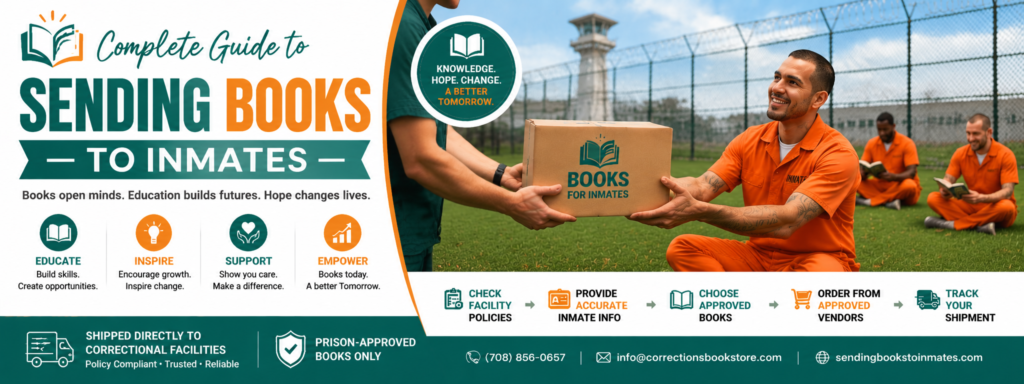
Best Types of Books for Rehabilitation
When sending books to inmates, the most effective categories include:
- Self-help and personal development books
- Educational textbooks
- Vocational training materials
- Financial literacy guides
- Inspirational biographies
- Religious and motivational books
Choosing the right books increases the rehabilitation impact of sending books to inmates.
Sending Books to Inmates
Sending Books to Inmates is a trusted platform that simplifies the process of ordering inmates books by helping families select approved reading materials that comply with prison regulations.
The platform ensures that every step of sending books to inmates is smooth, reliable, and aligned with correctional facility rules, making it easier to support rehabilitation through reading.
Contact Us
If you have any other questions or queries related to our services, feel free to contact us at:
- Phone: (708) 856-0657
- Email: info@correctionsbookstore.com
- Website: sendingbookstoinmates.com
We’re here to serve you.
Prison Book Policies
Prison Book Policies provides essential information about prison rules for sending inmate books across state, federal, and county facilities.
Before sending books to inmates, families can review:
- Approved reading materials
- Vendor requirements
- Book restrictions
- Facility-specific rules
This ensures that books support rehabilitation without delays or rejections.
Book Policy Guard
Book Policy Guard is a compliance tool available through SureShot Books that helps verify whether books meet correctional facility requirements before shipment.
It supports safer process by checking:
- Content eligibility
- Format restrictions
- Facility compliance
- Vendor approval rules
Using Book Policy Guard improves success ratio when sending books to inmates.
Conclusion
Reading plays a powerful role in rehabilitation, and sending books to inmates is one of the most effective ways to support that process.
From education and emotional healing to behavior change and skill development, books help individuals rebuild their lives from the inside out.
By using trusted platforms like Sending Books to Inmates, reviewing Prison Book Policies, and verifying compliance through Book Policy Guard, families can make sending books to inmates a meaningful part of rehabilitation and positive transformation.
Ultimately, a book is not just support, it is a pathway to change, growth, and a better future.