
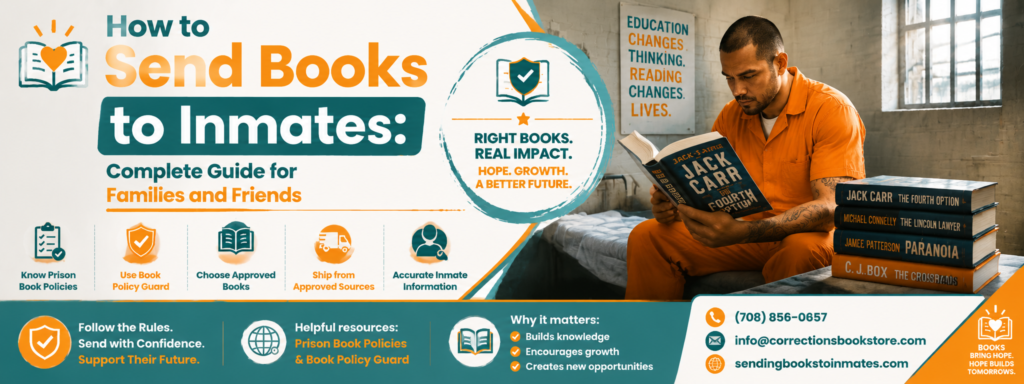
For families and friends with incarcerated loved ones, one of the most meaningful ways to stay connected is to send books to inmates. Books provide education, encouragement, entertainment, and personal growth opportunities during incarceration. Whether you want to send books for educational purposes, religious study, self-improvement, or recreational reading, understanding the proper process is essential.
Many correctional facilities allow families and friends to send books to prisoners, but each institution has unique rules regarding what materials can be received and how they must be shipped. Failing to follow these requirements can result in rejected deliveries and unnecessary frustration.
This guide explains by Sending Books to Inmates everything you need to know to send books to inmates, including prison regulations, approved book types, delivery requirements, and valuable resources such as Prison Book Policies and Book Policy Guard (integrated in SureShot Books Publishing LLC).
Why Families and Friends Choose to Send Books to Inmates
There are many reasons why people choose to send books to prisoners. Reading can positively impact an inmate’s mental health, education, and rehabilitation efforts.
When you send books to prisoners, you provide:
- Educational opportunities
- Personal development resources
- Religious and spiritual guidance
- Entertainment and stress relief
- Career and vocational training materials
- Motivation and encouragement
Research has consistently shown that education and reading programs can contribute to successful reintegration after incarceration. Choosing best books to inmates is one of the most practical ways to support a loved one’s personal growth.
Understanding Prison Book Policies Before You Send Books to Inmates
Before sending books to inmates, it is important to understand that every correctional facility has different regulations.
Some prisons allow only books shipped directly from approved retailers. Others restrict certain genres, formats, or quantities. This is why families should always review facility-specific guidelines before attempting to send books to prisons.
A valuable resource for checking facility requirements is Prison Book Policies. This platform helps families understand prison-specific regulations regarding inmate book deliveries, making it easier to send books to inmates without violating facility rules.
By reviewing prison regulations in advance, you can significantly improve your chances of successfully delivering books.
Common Rules When You Send Books to Inmates
Although policies vary, several common requirements apply when you send books to prisoners in correctional facilities.
Direct Shipment Requirements
Many facilities require that you send books to inmates directly from:
- Approved bookstores
- Authorized publishers
- Specialized inmate book vendors
Personal shipments are often prohibited.
For the best results, many families choose trusted providers such as SureShot Books Publishing LLC and Corrections BookStore, both of which understand correctional facility requirements and help ensure compliance with prison mail regulations.
Paperback Restrictions
Some prisons only allow paperback books. Before you send books to inmates, verify whether hardcover books are permitted.
Content Restrictions
Correctional institutions may reject books containing:
- Explicit material
- Security-related information
- Gang-related content
- Certain forms of violence
Always review facility guidelines before you send books to inmates.
Accurate Inmate Information
To successfully send books to inmates, you must include:
- Full inmate name
- Inmate identification number
- Facility name
- Correct mailing address
Even minor mistakes can cause delivery delays or rejection.
How to Send Books to Inmates Successfully
Following a step-by-step process can make it easier to send books to your loved ones without complications.
Step 1: Verify Facility Rules
The first step before you send books to inmates is confirming the institution’s mail policies.
Review official prison regulations or use trusted resources that provide facility-specific information.
Step 2: Research Prison Book Policies
Prison Book Policies is designed to help families understand inmate book regulations nationwide.
Before you send books to inmates, checking policy information can help you avoid ordering books that may be rejected.
This simple step can save time, money, and frustration.
Step 3: Use Book Policy Guard
Another helpful tool is Book Policy Guard.
Book Policy Guard helps identify facility-specific requirements and provides guidance that can help families confidently send books to inmates while minimizing compliance issues.
When combined with facility guidelines, Book Policy Guard can make the process of attempting to send books to inmates much simpler.
Families ordering through SureShot Books Publishing LLC can access Book Policy Guard as an additional resource to help verify facility requirements and improve the likelihood of successful inmate book delivery.
Step 4: Select Appropriate Books
When you send books to inmates, choose materials that align with prison regulations and the inmate’s interests.
Popular categories include:
- Educational books
- GED preparation
- Business books
- Religious texts
- Self-help books
- Vocational training guides
- Inspirational literature
- Fiction and biographies
Step 5: Order from a Trusted Source
To successfully send books to inmates, use a reputable bookstore or publisher that understands correctional facility requirements.
Sending Books to Inmates, SureShot Books Publishing LLC, and Corrections BookStore were created to help families and friends find prison-approved reading materials and simplify inmate book delivery. Ordering through experienced inmate book providers can reduce the risk of rejected shipments and help ensure compliance with facility policies.
Step 6: Track the Shipment
Whenever possible, track your order after you send books to inmates. Tracking allows you to monitor delivery progress and identify potential issues early.
Best Books to Send to Inmates
Choosing the right material is just as important as knowing how to send books to inmates.
Popular categories include:
Educational Books
Many families send books to inmates pursuing educational goals such as:
- GED completion
- College preparation
- Career advancement
- Skill development
Self-Help Books
Self-improvement materials remain among the most requested books when people send books to inmates.
Topics include:
- Leadership
- Communication
- Personal growth
- Financial literacy
- Goal achievement
Religious Books
Religious materials are frequently chosen when families send books to inmates seeking spiritual support.
Fiction and Entertainment
Books provide positive entertainment and mental stimulation during incarceration.

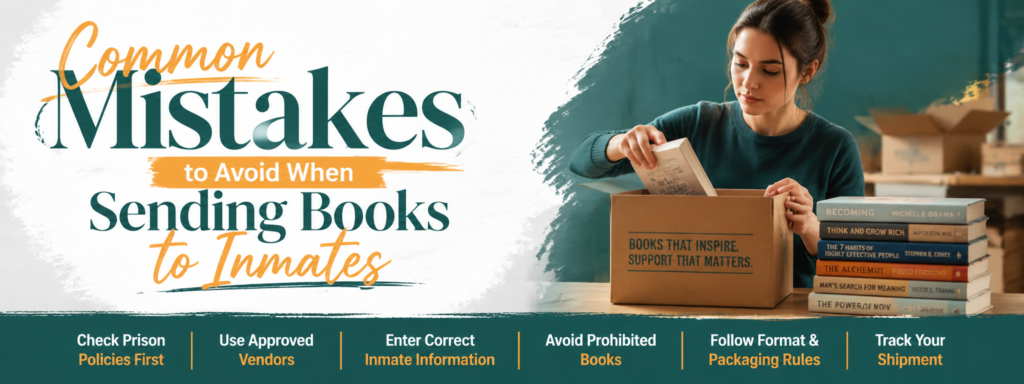
Common Mistakes to Avoid When You Send Books to Inmates
Many rejected shipments result from simple mistakes.
Avoid these common errors when you send books to inmates:
- Using incorrect inmate information
- Sending books from a personal address
- Ignoring prison regulations
- Purchasing prohibited content
- Ordering hardcover books when only paperbacks are allowed
- Failing to verify facility policies
The more carefully you prepare before you send books to inmates, the greater your chances of successful delivery.
Why Sending Books to Inmates Makes a Difference
When families and friends send books to inmates, they provide more than just reading material.
Books can help inmates:
- Improve literacy skills
- Learn new trades
- Strengthen faith
- Develop business knowledge
- Prepare for employment
- Build confidence
- Maintain a positive mindset
Every time you send books to inmates, you invest in education, rehabilitation, and personal growth.
Why Choose Sending Books to Inmates
At Sending Books to Inmates, we understand the challenges families face when trying to send books to inmates.
Our mission is to simplify inmate book delivery by providing access to prison-approved books and helpful educational resources. Working alongside trusted industry leaders such as SureShot Books Publishing LLC and Corrections BookStore, we help customers navigate correctional facility requirements and find books that support learning, personal development, faith, and rehabilitation.
Whether you are helping a spouse, child, parent, sibling, or friend, our goal is to make it easier to send books to prisoners safely and successfully.
Contact Us
If you have any other questions or queries related to our services, feel free to contact us at:
- Phone: (708) 856-0657
- Email: info@correctionsbookstore.com
- Website: sendingbookstoinmates.com
We’re here to serve you.
Conclusion
Learning how to send books to inmates does not have to be complicated. By understanding prison regulations, verifying inmate information, choosing approved books, and utilizing resources like Prison Book Policies and Book Policy Guard, families can improve their chances of successful delivery.
When you send books to inmates, you provide knowledge, hope, encouragement, and opportunities for growth. Books remain one of the most valuable gifts that incarcerated individuals can receive.
If you are ready to send books to prisoners, take the time to review facility requirements, select appropriate reading materials, and work with trusted providers such as Sending Books to Inmates, SureShot Books Publishing LLC, and Corrections BookStore. Your support can make a lasting difference in the life of a loved one.