
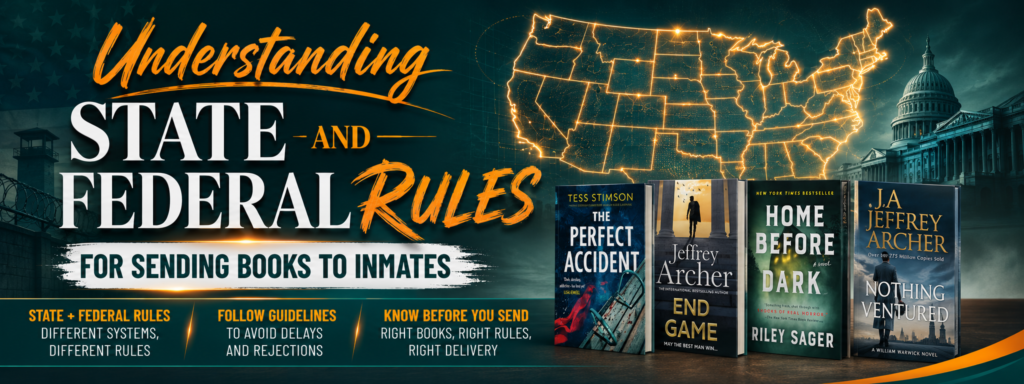
If you are planning to send books to inmates, it is important to understand that rules are not the same everywhere. State prisons, federal prisons, county jails, and private facilities all have different policies that affect how you can successfully complete the process.
Knowing the difference between state and federal rules helps ensure that books are sent correctly, reducing delays, rejections, and confusion.
This guide by Sending Books to Inmates explains how state and federal systems differ and what you need to know before sending books to your loved ones in prisons.
1. Difference Between State and Federal Prisons
One of the most important things to understand is the difference between state and federal systems.
- State prisons are managed by individual states
- Federal prisons are managed by the Federal Bureau of Prisons (BOP)
Each system has different rules, especially regarding vendors, content, and shipping procedures.
2. Federal Rules for Sending Books to Inmates
Federal prisons generally have strict and uniform rules for inmate books.
Common federal requirements include:
- Books must come from approved vendors
- Direct shipping from publishers or bookstores is required
- Used books are often not allowed
- Hardcover restrictions may apply
When sending books in federal facilities, compliance with BOP rules is essential.
3. State Prison Rules for Sending Books to Inmates
State prison rules vary widely, making the process more complex.
Each state may have different policies regarding:
- Approved vendor lists
- Book formats
- Content restrictions
- Package limits
Because of these differences, it is important to check state-specific rules.
4. County Jail Rules for Sending Books to Inmates
County jails often have stricter limitations compared to prisons.
When sending inmate books in county facilities:
- Book access may be limited
- Only new books are often accepted
- Vendor restrictions are common
- Delivery may be temporary due to short stays
Always verify jail policies before ordering books for your loved ones in prisons.
5. Approved Vendors for Sending Books to Inmates
Most facilities require that you use approved vendors while sending books.
These typically include:
- Authorized bookstores
- Publishers
- Specialized inmate book services
Platforms like Sending Books to Inmates help streamline this process and ensure compliance when sending books to inmates across different jurisdictions.
6. Book Format Rules (State vs Federal)
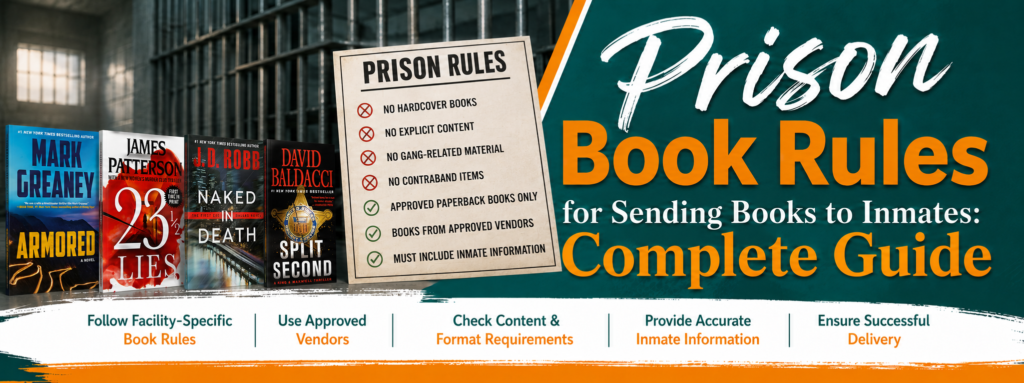
Book format rules vary depending on the facility.
Common restrictions include:
- Paperback books often preferred
- Hardcover books may be banned in some facilities
- Spiral-bound books may be restricted
Understanding format rules is essential for successful delivery and to avoid delays and rejection.
7. Content Restrictions in State and Federal Prisons
Both systems enforce strict content rules for inmate books.
Commonly restricted content includes:
- Explicit material
- Gang-related content
- Security-sensitive information
- Illegal activity instructions
Always check content rules before placing order.
8. Inspection Rules for Incoming Books
All books are inspected before being delivered.
During inspection, facilities may:
- Open packages for review
- Check page-by-page content
- Reject non-compliant materials
This is why proper compliance is critical when sending books to inmates.
9. Why Rules Differ So Much Between Facilities
Rules for prison books do vary because:
- Security levels differ
- State laws vary
- Facility management policies differ
- Risk assessments differ
This makes understanding rules essential.
10. Best Practices for Sending Books to Inmates
To ensure successful delivery and avoid delays and rejection, always:
- Check Prison Book Policies first
- Use approved vendors like
- Verify inmate information
- Confirm state or federal rules
- Use Book Policy Guard for compliance checks
- Follow packaging guidelines
These steps greatly improve success ratio.
Sending Books to Inmates
Sending Books to Inmates is a trusted platform that simplifies the process of sending books to prisoners by helping families and friends choose approved books and follow correct correctional facility guidelines.
It ensures that users can confidently complete the process of ordering inmate books while meeting both state and federal requirements.
Prison Book Policies
Prison Book Policies provides detailed, up-to-date information on facility rules for sending books to inmates.
It helps users understand differences between state and federal systems, including:
- Book restrictions
- Vendor requirements
- Mailing rules
- Facility-specific policies
Checking Prison Book Policies helps prevent mistakes and rejected shipments.
Book Policy Guard
Book Policy Guard is a compliance tool available when ordering through SureShot Books. It helps verify whether books meet prison requirements before shipment.
This tool is especially helpful when ordering inmate books, as it ensures that selected books comply with both state and federal prison rules.
Using Book Policy Guard reduces the risk of rejection when sending books to inmates.
Why Understanding Rules Matters
Following state and federal rules ensures successful delivery and avoid delays and rejection:
- Avoids rejection
- Reduces delays
- Ensures compliance
- Supports rehabilitation
- Helps books reach inmates successfully
Proper knowledge makes sending books to inmates smoother and more reliable.

Contact Us
If you have any other questions or queries related to our services, feel free to contact us at:
- Phone: (708) 856-0657
- Email: info@correctionsbookstore.com
- Website: sendingbookstoinmates.com
We’re here to serve you.
Conclusion
Understanding the difference between state and federal rules is essential for successful sending books to inmates. Each system has unique requirements that must be followed carefully.
By using trusted resources like Sending Books to Inmates, reviewing Prison Book Policies, and verifying compliance through Book Policy Guard, families can simplify sending books to inmates and avoid costly mistakes.
When rules are followed correctly, books becomes a powerful and effective way to support education, growth, and positive change.